GEO & AEO for for SaaS Companies: Win the AI Software Shortlist
Get your product named when AI builds a buyer’s software shortlist. Our GEO for SaaS helps capture the AI software searches.
Buyers now run their software research through AI, and it returns just a few tools. When your product is missing, the deal is lost at a research stage you never see, and a competitor the model could verify wins the shortlist in your place.
Our Generative and answer engine optimisation services get your SaaS cited in the comparison, alternatives and “best software” answers that decide deals, by building product-led content, off-page citation and review authority, and the entity clarity engines trust.
We get you surfaced for the queries buyers actually run: “best [category] software,” “[competitor] alternatives,” and “[Tool A] vs [Tool B].”

- ✔ Cited across ChatGPT, Perplexity, Gemini and Google AI
- ✔ Win comparison, alternatives and category queries
- ✔ Product-led content plus off-page review authority
- ✔ Fixed pricing, self-serve, no retainers
Get Your SaaS AI Visibility Audit →
Table of Contents
- Software Categories We Optimize for AI Search
- How Software Buyers Now Research With AI
- Where AI Learns Which Tools to Recommend
- High-Value AI Queries Your SaaS Brand Must Win
- Why GEO for SaaS Can’t Be Ignored
- GEO Strategy for SaaS: Content, Entity and Authority
- Our Generative Engine Optimization Services for SaaS Companies
- SaaS AI Search Optimization Pricing
- Software Visibility Signals We Strengthen
- Comparison and Alternatives Queries: Where Deals Are Won
- Why Choose Our AEO For Software Companies’ Service
- How Our Answer Engine Optimization for SaaS Works
- FAQs
Software Categories We Optimize for AI Search
We deliver GEO and AEO for software companies that want their product named when AI recommends tools.
We get products cited for category, comparison, alternatives and integration queries across ChatGPT, Perplexity, Gemini and Google AI.
Software categories we work across include:
- B2B SaaS and horizontal platforms
- Vertical and industry-specific software
- Sales, CRM and revenue tools
- Marketing and martech platforms
- HR, recruiting and people tools
- Finance, accounting and FinTech software
- Project management and collaboration
- Developer tools and infrastructure
- Cybersecurity and compliance software
- Analytics, data and BI platforms
- Customer support and success tools
- E-commerce and payments software
Each category needs real product depth, trusted third-party signals, and content that answers how buyers actually research. Our work teaches AI engines what your product does, who it serves, and why it belongs on the shortlist.
How Software Buyers Now Research With AI
The software buying journey has restructured itself in under two years. As of 2026, 51% of B2B software buyers begin their research inside an AI chatbot rather than a search engine, up from 29% a year earlier, and ChatGPT alone accounts for roughly 63% of that research. Buyers have shifted from gathering sources to asking one question and receiving a synthesized shortlist.
The commercial stakes are direct. In the same research, 69% of buyers chose a different vendor than they had originally planned based on AI guidance, and 85% said they think more highly of a vendor when an AI recommends it. The demo request now arrives late, after weeks of research inside ChatGPT and Perplexity, once a shortlist you were either on or absent from is already set.
Here is the opening: only around 14% of software marketers run a mature AI-visibility strategy. Buyer behavior has outrun the marketing, so the products that act now capture citations before their category catches up.
Where AI Learns Which Tools to Recommend
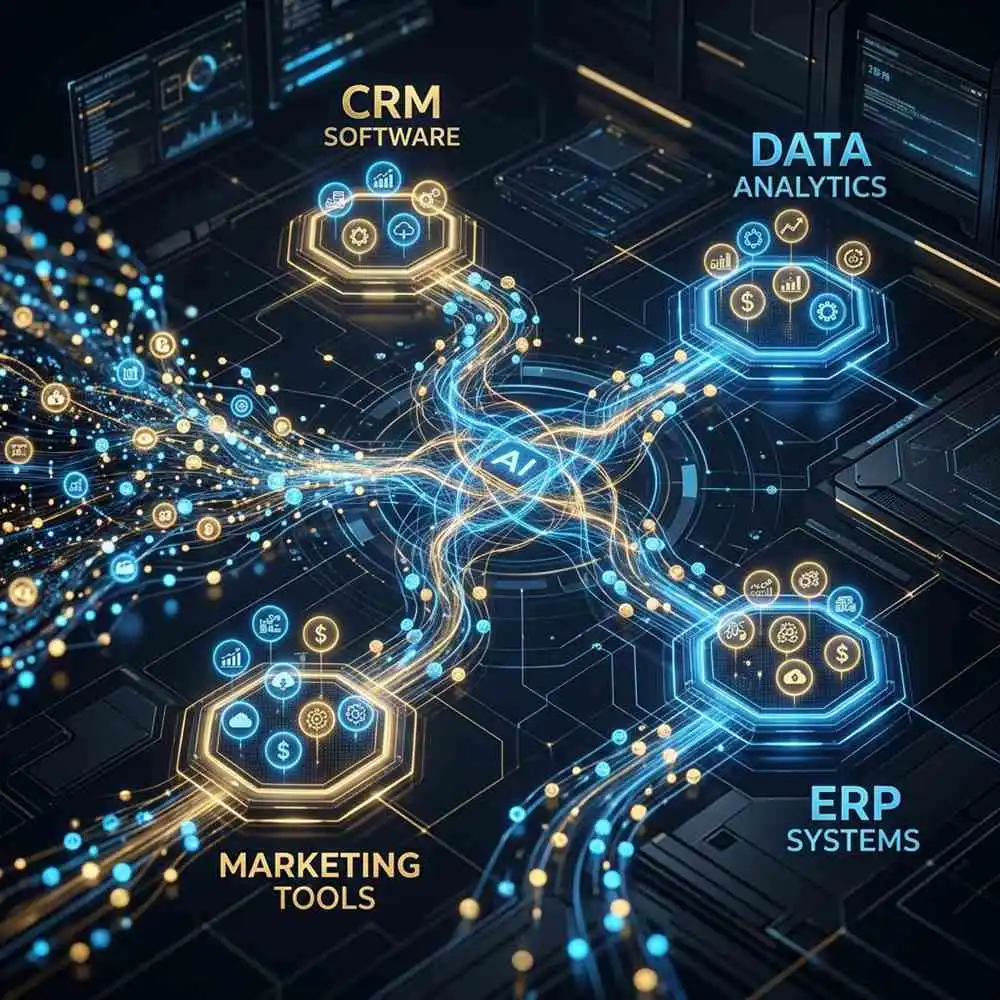
This is the mechanism most product teams miss. When an AI engine answers “what’s the best tool for X,” it does not invent a shortlist, it draws on the sources it has learned to trust for software. Knowing those sources is the whole strategy.
AI builds software recommendations from a few signal types:
- review platforms. G2, Capterra, TrustRadius and Product Hunt are primary sources AI leans on for software, the equivalent of directories in other fields. Strong, consistent presence and ratings there make an engine confident enough to name you.
- Comparison listicles and roundups. “Best [category] software” and “top alternatives” articles carry outsized citation weight, so a placement in credible ones puts your product directly in the recommendation path.
- Community and discussion threads. Real conversations where buyers ask for tool recommendations weigh heavily in Perplexity and AI Overviews, reading as authentic user endorsement.
- Co-occurrence. How consistently your product appears alongside a category or use case teaches the model what you are known for.
Most brands have optimized only their own site and left these off-page signals thin. That gap is exactly where software citations are won, and where our entity building and authority work concentrates.
High-Value AI Queries Your SaaS Brand Must Win
Buyers do not search in keywords; they ask situational, comparative questions. Because AI names only a handful of tools per answer, being cited across these query types is decisive.
| Query type | What the buyer asks AI | What earns the citation |
|---|---|---|
| Category discovery | “Best [category] software for a mid-market team” | Category and use-case content, review-platform signals |
| Comparison | “[Tool A] vs [Tool B] for [use case]” | Comparison content, co-occurrence, third-party validation |
| Alternatives | “[Competitor] alternatives” | Alternatives content and listicle placements |
| Integration and capability | “Does [tool] integrate with [stack]?” | Feature, integration and documentation content (AEO) |
Win these and you enter the shortlist at the moment it forms. Miss them, and a competitor the model can verify takes the slot.
Why GEO for SaaS Can’t Be Ignored Right Now
Three forces make AI visibility urgent for software brands:
- AI sets the shortlist before you meet the buyer. Most engines name just two to seven tools per answer, far fewer than Google’s ten links. That compression makes citation placement decisive, a buyer who gets a synthesized shortlist rarely clicks past it, so products off the list are invisible when the decision narrows.
- Strong Google rankings no longer guarantee discovery. Category leaders regularly rank first on Google yet appear in zero AI recommendations for the same category, because the buyer never opened Google. SEO and AI visibility are different levers, and one does not automatically produce the other.
- The first-mover window is open and closing. With only around 14% of software marketers running a mature AI strategy, the products that build product-led content and off-page authority now lock in citations rivals will struggle to displace. AI rewards substance and consistency, so a focused tool can out-cite a louder, better-funded competitor.
See where your product stands in AI answers.
GEO Strategy for SaaS: Content, Entity and Authority
Winning AI citations for software is not one tactic; it is three working together, across generative engine optimization and answer engine optimization.
- Content answers the buyer’s real questions. Category, comparison, alternatives, and use-case pages, written product-led and answer-first, give the engine specific, quotable material for each high-value query, including the direct-answer (AEO) responses to feature and integration questions.
- An entity makes the engine confident about what your product is. Clean structured data, consistent naming, category placement, and knowledge-graph presence let an engine verify your tool and slot it into the right comparisons.
- Authority is the third-party validation AI leans on for software. Review-platform presence and ratings, credible comparison placements, and community mentions corroborate that your product is real and well-regarded.
Get all three right, and you become a product AI engines reach for across your category. Miss one, and a competitor that covered it gets the citation.

Our Generative Engine Optimization Services for SaaS Companies
We make your product citable through three connected, fixed-price services. Sequence matters: prove the gap, build off-page authority, then create the product-led content that gets quoted.
SaaS GEO Audit
We test how AI engines present your product and where rivals win.
- Prompt-level testing across categories, comparison, and alternatives queries
- Your AI presence versus competing tools, by query type
- Review-signal and citation gaps identified
- A prioritized action plan, from $99
Product Entity and Authority Placements
We build the off-page signals AI trusts when recommending software.
- Placements in DR30+ comparison listicles and roundups
- Community and discussion mentions where buyers research
- Co-occurrence mapping tying your product to its category
- Permanent, human-built placements, from $220
View Entity Building details →
Product-Led Content Creation
We write the comparison, alternatives, and use-case content that earns citations.
- Answer-first pages for your highest-value buyer queries
- Comparison and alternatives content built to be quoted
- Authored with real product depth and clear sourcing
- From $450
Already have product and category pages? GEO Content Optimization rebuilds them for AI citation from $250.
SaaS AI Search Optimization Pricing
SaaS GEO runs on our standard fixed prices, no custom retainer, no discovery call. Most software teams follow a clear path:
- Start: GEO Audit, from $99. See your AI presence across category, comparison, and alternatives queries, and which gaps to close first.
- Build: Entity and Authority Placements, from $220. Establish the review, listicle, and community signals AI uses to verify and recommend software.
- Grow: Product-Led Content, from $450. Publish the comparison, alternatives, and use-case content that wins citations.
- Scale: Managed monthly programs, from $590 to $3,490 per month. The full program runs for you across categories and competitors.
Every service is fixed-price, ordered online with a self-serve brief at checkout, and white-label if you are an agency serving software clients. No minimums, no contracts. For multi-product suites or full category campaigns, we can scope a combined program on the same transparent basis.
Software Visibility Signals We Strengthen
AI engines need clear proof before they name a product in a software answer. We strengthen the signals that let ChatGPT, Perplexity, Gemini, and Google AI read your product, match it to buyer queries, and trust it over rivals:
- Product entity signals and consistent naming
- Software Application and Organization schema
- Category and use-case content depth
- Comparison and alternatives coverage
- Review-platform presence and ratings
- Placements in credible comparison listicles
- Community and discussion citations
- Co-occurrence with your category and use cases
- Integration and capability documentation
Comparison and Alternatives Queries: Where Software Deals Are Won
If one battleground decides software citations, it is the comparison. More than any other vertical, software buyers research by pitting options against each other, and the tool cited in that moment shapes the outcome.
Three query shapes carry most of the weight. “[Tool A] vs [Tool B]” queries put you head-to-head with a named rival, and being the cited, favorably framed option tilts the comparison. “[Competitor] alternatives” queries are your fastest route into an established rival’s consideration set, buyers actively looking to switch, with intent to match. And “best [category] software” queries build the shortlist from scratch, where absence means you are out before evaluation begins. Winning them takes comparison and alternative content written answer-first, so an engine can lift a clean verdict, backed by the review and listicle signals that make the verdict credible.
This is also where answer engine optimization and generative engine optimization meet. The direct “is X better than Y for Z” answer is an AEO win; the broader “here are the best tools for Z” recommendation is a GEO win. We build both, because buyers run both queries on the way to a decision, and the product cited in each is the one that gets shortlisted.
Why Choose Our AEO For Software Companies’ Service
- Built For Software Buying: We optimize for the comparison, alternatives and category queries buyers actually ask AI, not vanity brand terms.
- Off-Page Citation Placements: We build the review platform, listicle, and community signals AI leans on specifically when recommending software.
- Product-Led, Not Generic: We write content with real product depth and clear sourcing, the substance engines cite over thin marketing pages.
- Fixed Pricing, No Retainers: Every service is priced upfront from $99, with no discovery call and a self-serve brief at checkout.
- Hand-Built, Quality-Checked: Every placement and page is created by hand and verified against our citation standards, so what ships is what gets cited.
How Our Answer Engine Optimization for SaaS Works
Step 1: Audit and prioritize. You order a GEO Audit and we show you how AI engines present your product across category, comparison and alternatives queries, which competitors are cited instead, and where the fastest wins are. Your self-serve brief sets it moving the same day.
Step 2: Build authority, then content. We establish your product’s entity, review and off-page signals, then create or optimize product-led content query clusters by query cluster, aligned to every major AI engine.
Step 3: Win citations and compound. Early AI citations typically appear within weeks, with a durable shortlist presence building over the following months as your authority and content compound across categories and competitors.
No retainers. No discovery calls. No waiting to begin.
Get Your SaaS on the AI Shortlist
Your buyers are already asking AI which software to choose, and the answer names only a few tools. Make sure yours is one of them. Start with a research package to see where your product stands across the queries that decide deals. Fixed price from $99, no retainers, no calls.
Frequently Asked Questions (FAQs)
How do SaaS companies get cited by ChatGPT and AI search?
SaaS companies get cited by building the content and credibility signals AI engines verify before recommending software: product-led comparison, alternatives and use-case content, clean structured data, and strong presence on review platforms like G2 and Capterra. AI weighs a product’s substance across many sources rather than ranking sites, so citations come from depth and consistency, not ad spend.
Why isn’t my software showing up in AI recommendations?
Most products are absent because their content was written for keyword rankings, not AI citation, and their off-page signals, reviews, comparison placements, and community mentions are thin. Since engines name only two to seven tools per answer, without that material, they cite a competitor that they can verify. A GEO audit shows exactly which signals are missing.
Do review sites like G2 and Capterra affect AI visibility?
Significantly. Review platforms are a primary source AI engines trust for software recommendations, so consistent presence and ratings on G2, Capterra, TrustRadius, and Product Hunt make an engine more confident when naming your product. We build these signals as part of entity and authority work.
How do I win comparison and alternatives queries in AI?
You win them with answer-first comparison and alternative content backed by review and listicle authority. The engine needs a clear, credible source to cite for “X vs Y” or “X alternatives,” and it favors products with consistent third-party validation. We build both the content and the off-page signals that get your product named.
What is the difference between GEO and AEO for software companies?
GEO earns your product the recommendation inside an AI answer, while AEO earns the direct response to a specific question, “does [tool] support [feature]” or “is X better than Y for Z.” Both rely on product-led, well-structured content, so we build them together to cover the full buyer journey.
How is GEO different from SaaS SEO?
SaaS SEO targets rankings in Google’s results; GEO targets citations inside AI-generated answers. They are different levers, and a product ranking first on Google can still be absent from AI shortlists. GEO optimizes for the product depth, entity clarity, and review signals AI uses to build software recommendations.
How much does GEO for SaaS cost?
GEO for SaaS uses our fixed prices, from $99 for an audit, $220 for entity and authority placements, and $450 for product-led content, with managed monthly programs from $590 to $3,490 per month. Every price is published upfront, with no retainers, no discovery calls, and no long-term contract.