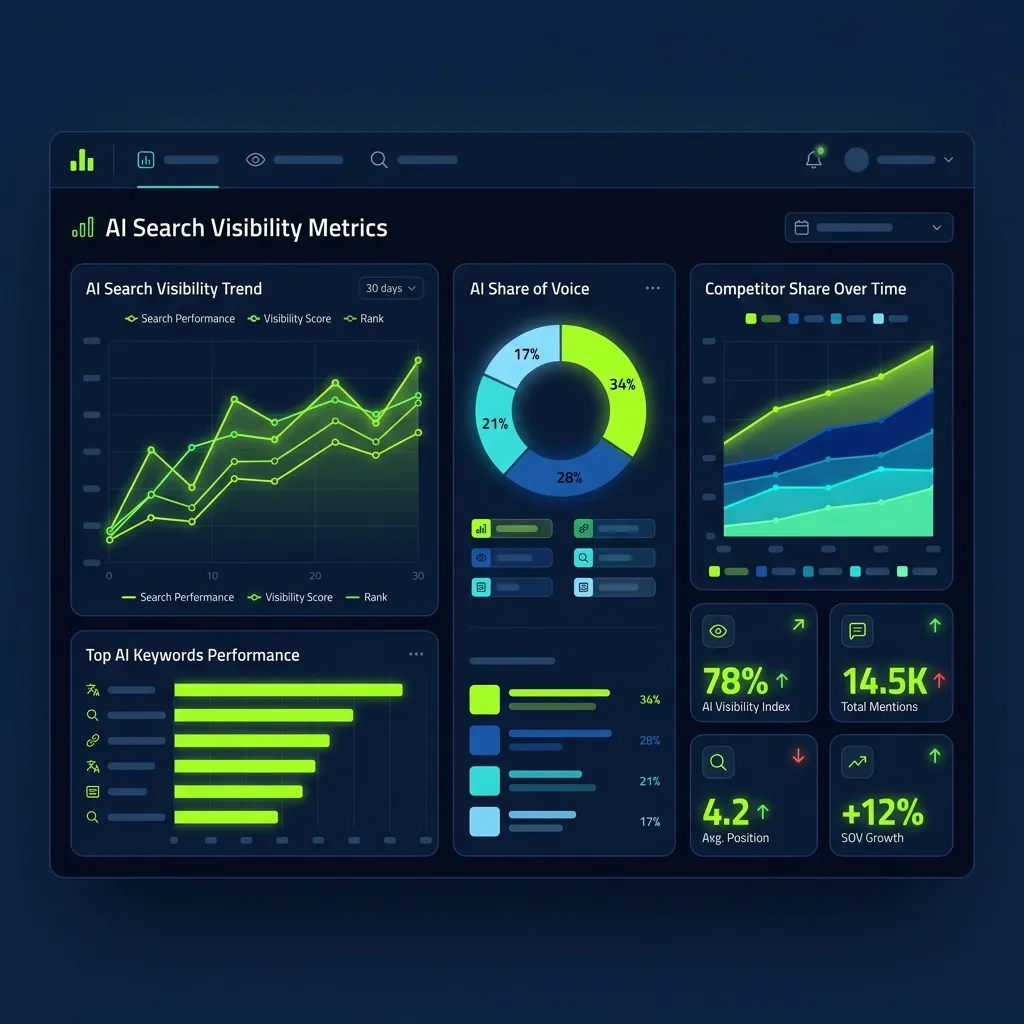
AI Search Agency Pricing at a Glance
These are one-time AI search optimization packages, not a monthly retainer and not the $99 AI Search Audit. Starter is $450, Professional is $850, and Enterprise is $1,550. Each tier covers ChatGPT, Perplexity, Gemini, Google AI Overviews, Microsoft Copilot, and Claude. You choose a tier, send the brief, and work starts from that brief. No discovery call.
- ✓ Designed to improve citation readiness across all 6 major AI search platforms
- ✓ Answer-first formatting, schema, and consistent entity naming on every delivery
- ✓ One-time fixed pricing designed for clear, predictable project costs. Fully self-serve. No discovery calls required.
📋 On This Page
Our Fixed-Price Packages
Choose the tier that matches the size of the project. Prices below are the full project cost for that tier.
For a focused set of commercial topics and service terms.
- Comprehensive baseline research
- High-quality asset deployment
- Answer-first block formatting
- FAQ and schema code mapping
- Turnaround: 7 business days
A broader cluster around your primary category prompts.
- Advanced competitive research
- High-volume asset deployment
- Detailed competitor gap analysis
- FAQ, entity, and schema mapping
- Turnaround: 10 business days
A wider program for established sites and large catalogs.
- Complete topical mapping
- Maximum asset deployment
- Full topical map alignment
- Custom JSON-LD schema files
- Turnaround: 14 business days
What’s Included
Every tier is a done-for-you AI search project. The difference between tiers is scope and turnaround, not which platforms are covered. All three include the same six platforms.
- Baseline research: conversational queries your buyers actually ask, grouped by intent, so the work targets real prompts on ChatGPT and Perplexity rather than a generic keyword list. See the research packages if you want the research delivered on its own.
- Answer-first pages: a direct 40 to 50 word answer at the start of each main section, written so a retrieval system can lift it without reading the whole page.
- Entity clarity: one consistent brand name, tied to the services and topics you want associated with it. Related work lives on the entity building page.
- Schema: JSON-LD mapped to the page, including FAQ markup where the content supports it. Starter and Professional include schema mapping. Enterprise includes custom schema files your team can deploy.
- A citation-readiness check against the same baseline we use in the AI search audit, before anything is delivered.
If you already know which URLs are weak, the content optimisation service restructures those pages. If you need a measurement before you buy a package, start with the audit at $99. That audit is a separate product. It is not the starting price of the packages on this page.
Platform Coverage
Each platform retrieves sources differently. A package is built so the same body of work can be read by all six, with the specific signals below handled in one pass. None of this is a promise that a given platform will cite you.
ChatGPT Optimization
ChatGPT retrieves live web data largely through Bing, then checks what it finds against material it already trusts. Pages with a stable brand name, a clear definition of what the company does, and supporting pages that say the same thing are easier to attribute. We keep entity names consistent, use a clean heading hierarchy, and note where Bing-side authority is thin. Where off-site mentions are part of the gap, that work sits with link building, not inside a claim that a backlink will produce a citation.
Perplexity Optimization
Perplexity favors short, sourced answers. It is more likely to use a passage that states a fact, names the source, and stays inside one idea than a passage that builds up to the point over several paragraphs. We put the answer first, attach the figure or reference to that sentence, and use headings that match the question a researcher would type. The page should be easy to quote in a single extract.
Google AI Overviews
AI Overviews lean on Google’s index, the Knowledge Graph, and structured data. Pages that match a clear query, use a single H1, and follow with question-and-answer content are easier for that system to parse. We add FAQ and, where it fits, product or service schema, and we keep the visible copy aligned with the schema so the markup describes the page rather than decorating it. Experience, expertise, and a named author still matter here. Schema does not replace them.
Gemini Optimization
Gemini draws heavily on Google’s entity graph. If a brand name appears in several formats, or the page never states which topics that brand covers, Gemini has less to attach a citation to. We use one brand string in the copy, headings, and schema, and we connect commercial pages to the guides that explain the same topic. Internal links should point at those entity pages on purpose, not at whatever URL is convenient. The aim is a coherent topic a model can recognize, not a single isolated page optimized in isolation from the rest of the site.
Microsoft Copilot Optimization
Copilot also depends on Bing for a large share of its web context. A page that only looks strong in Google can still be a weak Copilot source. We treat Copilot as its own pass: confirm the page is indexable for Bing, keep the same entity names used for ChatGPT, and use schema that matches the visible topic. Supporting links should reinforce the brand and the service, not a pile of loosely related URLs. This is the same six-platform scope as the rest of the package. Copilot is not covered by mentioning it in a list and then only writing for Google.
Claude Optimization
Claude tends to use sources that are specific and careful. Broad claims, missing attributions, and marketing lines with no checkable detail are poor material to extract. We write the key points as short statements: what the offer includes, who it is for, what it costs, and which source supports a statistic if one is used. Brand and product names stay consistent so a retrieved passage points at the right organization. Authoritative references are included where the claim needs them. The structure can make important information easier for retrieval systems to identify and extract. It does not force Claude to select the page.
How the Service Works
A package moves through six steps. You do not sit through a sales process before step one. The brief you send at order is the starting point.
- Query research: we group the questions buyers ask by intent, using the prompts people actually type into assistants, not only traditional keyword tools.
- Answer-first structure: each primary section opens with a direct answer of about 40 to 50 words.
- Entity reinforcement: the brand is named the same way throughout and tied to the services and topics in scope.
- Source-backed points: statistics and references are added only where they can be attributed, so a model is not asked to trust an unsupported line.
- Schema: JSON-LD is written and checked against the page content.
- Readiness review: before delivery, formatting is checked against the same visibility baseline used in the audit. The review confirms the page is structured for retrieval. It does not confirm a future citation.
Turnaround is 7 business days for Starter, 10 for Professional, and 14 for Enterprise, counted from the brief.
Methodology
Traditional SEO alone may not address the requirements of AI-powered search and answer engines. Rankings, backlinks, and keyword coverage still describe how classic results are ordered. ChatGPT, Perplexity, Gemini, AI Overviews, Copilot, and Claude assemble an answer from passages they retrieve. A page can rank and still be hard for those systems to quote, and a clear, well-structured page can be quoted without holding position one.
When someone asks an assistant a question, the system looks up relevant passages, passes those passages to the model, and writes an answer. Passages that state the point directly, name entities consistently, and match the question are easier to use. We open sections with a short standalone answer for that reason. This structure can make important information easier for retrieval systems to identify and extract.
Trust is the other half. Generative systems compare a claim with other sources. We attach figures to named references instead of leaving them as unsupported sentences, and we do not describe a formatting change as a guaranteed citation or a guaranteed return. The practical outcome we commit to is the delivery itself: research, restructured pages, schema, and a readiness review, on a fixed price and a stated timeline.
The same structure helps human readers. A direct answer and a clean heading hierarchy are easier to scan, which matters on a pricing page as much as it matters to a crawler. For a measurement of how the six platforms currently describe a brand, use the GEO audit or the AI search audit before or after a package.